
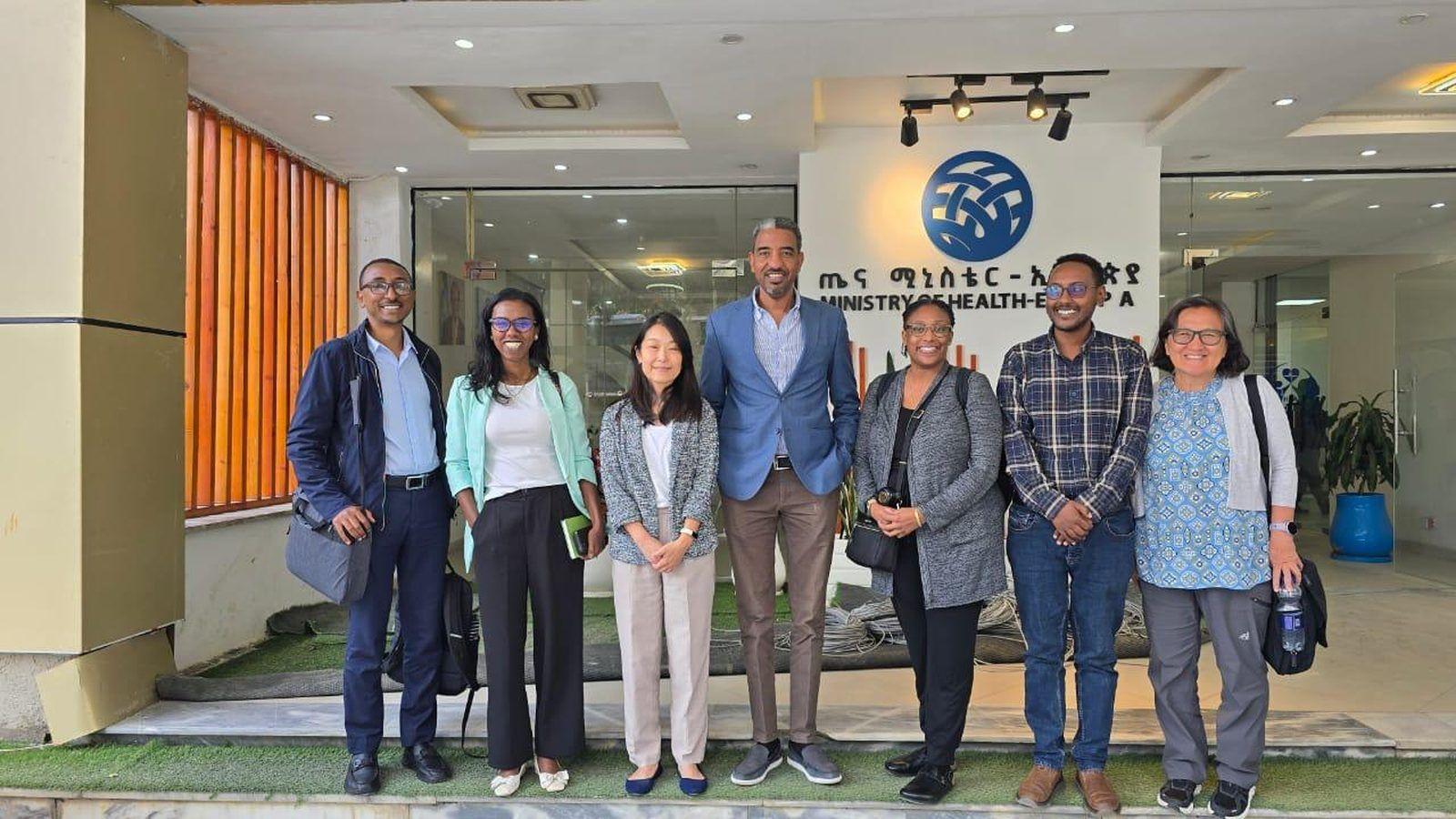
Experts from the U.S. Centers for Disease Control and Prevention (CDC) and The Ohio State University visited Tikur Anbesa and Zewditu hospitals from September 16-24, 2026 to review antimicrobial resistance (AMR) project progress and discuss sustainability. AMR occurs when microorganisms no longer respond to medicines used to treat them. During discussions, hospital leaders highlighted the project’s contributions to laboratory capacity, infection prevention and control (IPC), and collaboration between laboratory and clinical teams. During these visits at Tikur Anbesa Specialized Hospital and Zewditu Memorial Hospital, facility leaders recognized the project’s contributions to prevent and control the spread of antimicrobial-resistant organisms especially the support provided to achieve ISO accreditation of the microbiology labs of both facilities. Discussions focused on transition planning, continued technical mentorship, and integrating project-supported activities into routine hospital operations.
Expanding the Model: Bringing Project Experience to St. Paul Hospital. The team also visited St. Paul’s Hospital Millennium Medical College, where the project is expanding activities during the current implementation year (2026/27). Discussions drew on experience from the two established hospitals to explore how integrated IPC and laboratory support could be extended to another facility.
Discussions with technical leaders from the Ministry of Health’s IPC desk, the Antimicrobial Stewardship Program team under Pharmaceutical and Supply Chain Management, and the Ethiopia Public Health Institute (EPHI) team coordinating Ethiopia’s national AMR surveillance. These discussions provided valuable insight into national strategies, priorities, and ongoing initiatives in the three pillars. They also created opportunities to identify areas for stronger coordination among the U.S. CDC, OHGA Institute (formerly OSU GOH), the EPHI, and the Ministry of Health. The national scale-up of the OHGA Institute in-house IPC audit tool was one key area of collaboration with the National IPC desk.
The project’s next phase will focus on sustaining activities, strengthening hospital ownership, and sharing implementation lessons. Continued engagement with hospital leadership and national technical teams will support planning for integration into routine services.
This training is part of the Global Health Security Cooperative Agreement between the U.S. Centers for Disease Control and Prevention and The Ohio State University.